
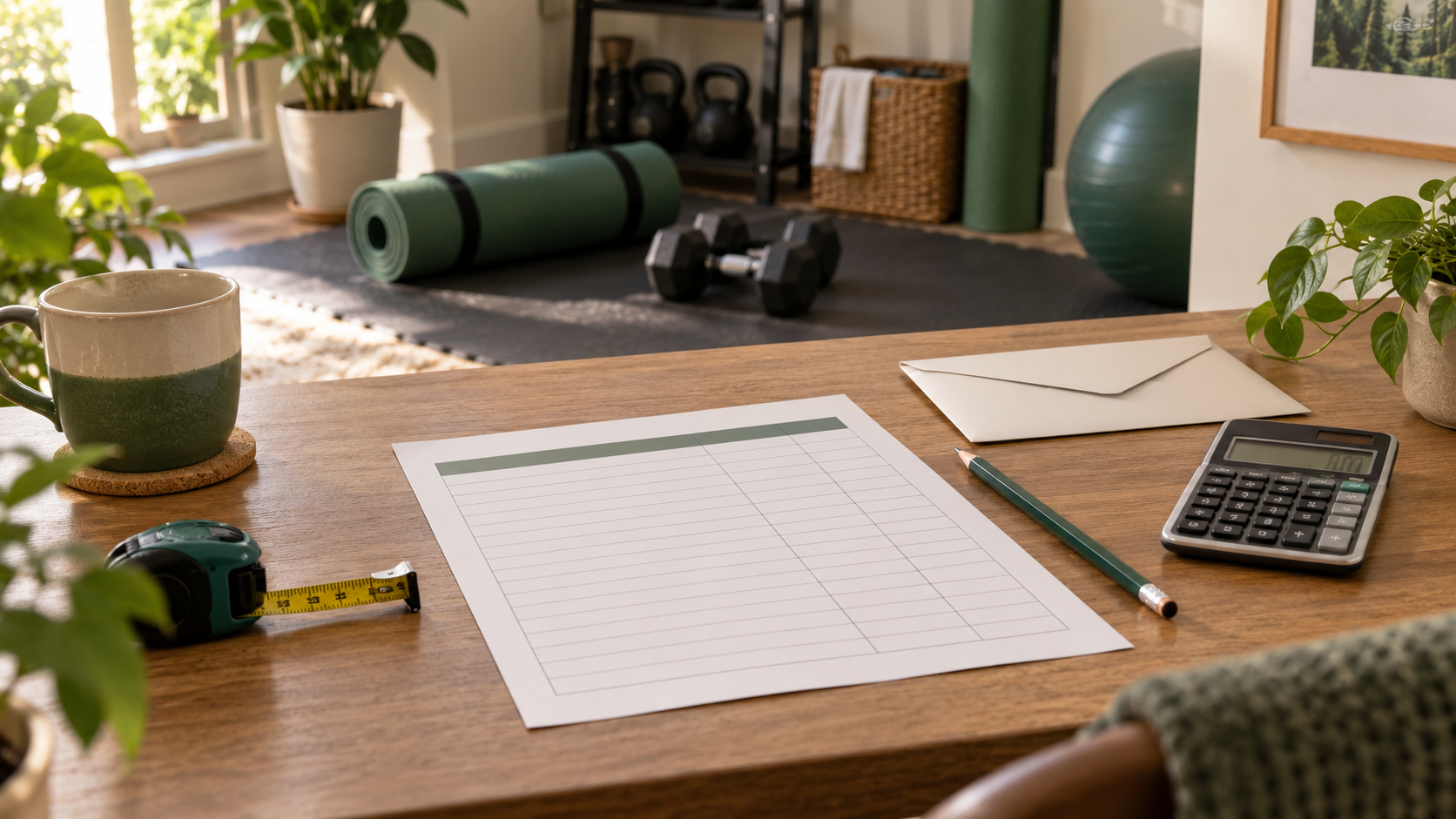
A home gym budget worksheet should include the cost of making equipment usable in your room, not just the number on a product page. Delivery, storage, assembly and ongoing costs can change which setup is practical. The aim is not to buy the largest collection: it is to make a plan you can complete without discovering essential expenses halfway through.
This guide gives you a quote-based worksheet rather than a universal price list. Prices, delivery terms and room requirements vary. Fill it with current written quotes for your location and the exact models you are considering.
Define a usable first phase
Write down what your first setup must let you do, where it will live and what you already own. Keep this description modest and specific. “A clear area for the routine I already follow, with organised storage” is a better purchasing brief than “a gym with everything.”
Before adding equipment to a cart, use your home gym inventory to check for items you can reuse. An item you own may still need inspection, a missing part or suitable storage; list those needs instead of assuming its remaining cost is zero.
Separate one-time and recurring costs
Create two sections. The first covers getting the space ready and the equipment installed. The second covers costs that may continue after the purchase. Do not add a monthly subscription to a one-time total without explaining the period it represents.
For one-time costs, consider the exact equipment configuration, required accessories, room preparation, delivery, assembly, storage and applicable taxes. For recurring costs, check whether your chosen product involves subscriptions, servicing or replacement consumables. Not every setup has every cost; mark a line “not applicable” only after checking.
Use these worksheet columns
- Item and purpose: what it is and why your first phase needs it.
- Exact specification: model, quantity, size and any required accessories.
- Quoted amount: current supplier figure in a clearly stated currency.
- Included: tax, delivery level and assembly, where confirmed.
- Not included or unknown: costs still requiring an answer.
- Quote date: when the price and terms were checked.
- Priority: essential for this phase, useful later or optional.
Keep an unknown amount visibly unknown. A blank delivery line can easily disappear from a total; a note saying “delivery to upstairs room not confirmed” is harder to overlook.
Compare complete configurations
A lower equipment price is not automatically a lower setup cost. Compare the same quantity, accessories, delivery service and installation scope. Check whether a photograph shows accessories that are sold separately. Ask what must be purchased for the exact use you intend.
For example, a fictional comparison might show Supplier A including assembly while Supplier B quotes the boxed item only. Do not label B cheaper until you have resolved the missing service. The worksheet should explain the difference, not hide it inside one impressive-looking total.
Price the delivery route, not just the postcode
Ask where the delivery ends: kerbside, doorway or the room where the equipment will be used. Confirm how stairs, restricted access, missed deliveries and packaging removal are handled. If help is needed to move or assemble the item, obtain a suitable quote before ordering.
Use our equipment delivery checklist to organise the measurements and questions. Follow the manufacturer’s handling and installation instructions; a budget worksheet is not a substitute for an assessment of whether a floor or installation is suitable.
Make optional purchases earn their place
Give each optional item a reason to buy now. Does it solve a problem you have already encountered, or does it mainly improve the appearance of the room? Mirrors, matching storage and decorative lighting can wait if essential setup questions remain unresolved.
Keep a separate later list so postponing an item does not feel like forgetting it. Revisit that list after using the first phase. You may discover that a simple storage change is more useful than the extra machine you originally wanted.
Check the plan before paying
- Confirm the exact items and quantities.
- Resolve every essential cost marked unknown.
- Check the supplier’s current delivery, return and warranty terms.
- Confirm the room and route meet the relevant equipment requirements.
- Separate one-time costs from ongoing commitments.
- Keep the accepted quote and order details with your equipment records.
If the complete plan exceeds your spending limit, reduce the scope or delay a purchase. Do not remove required installation work or safety-related components merely to make the total fit.
Common questions
What is a good home gym budget?
There is no single useful figure without knowing your room, existing equipment, intended use and local costs. Build a complete first-phase quote instead of relying on someone else’s shopping total.
Should I include equipment I already own?
Yes, in the inventory. Record only the additional costs needed for the current plan in the purchasing total, so you do not count the original purchase twice.
Is used equipment always the cheaper option?
Not necessarily. Collection, missing parts, condition and available support can change the comparison. Check the exact item and all required work rather than comparing listing prices alone.
Leave a Reply